
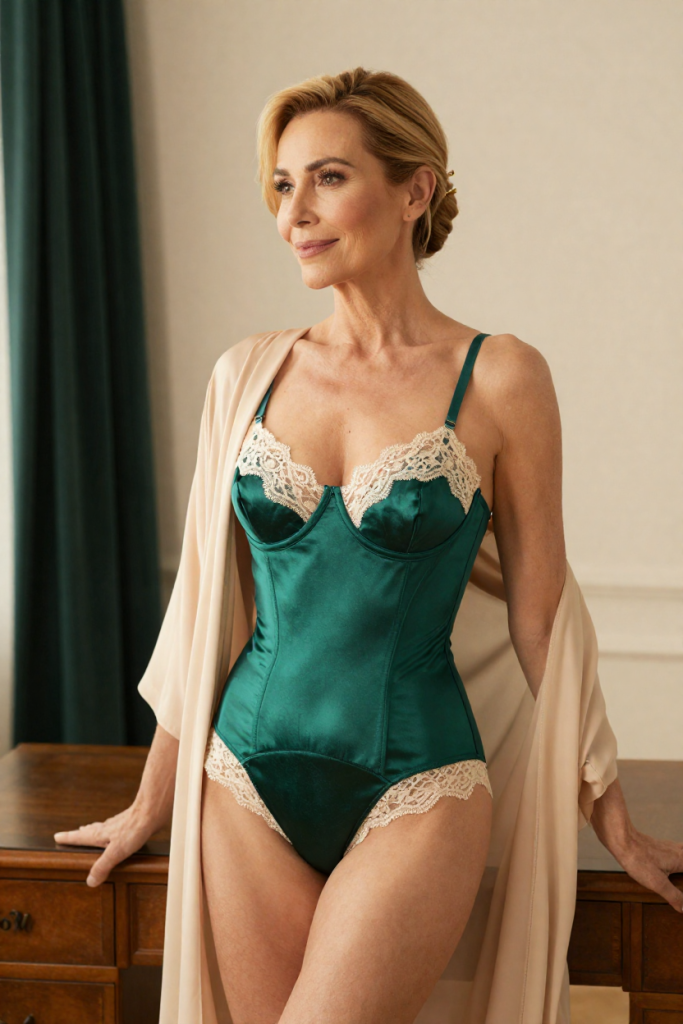
Series drift is usually blamed on the model. Look at the desk ledger instead. The character was described from memory at every job, and memory edits as it goes. The repair is clerical, not technical. Write the character down once, on a doorplate card you paste rather than retype.
Five fixed lines, always in order
A working doorplate card holds five things. Age — a number, and here a mature one. Hair — colour, length and one habitual style. Build — two or three words, no more. Face — one or two details that endure every crop. Signature — the detail that survives a tight frame. Everything else belongs to the changing line: outfit, room, hour, light, pose. Changing lines are meant to change. Card lines are not.
State lines plainly and positively — concrete descriptions survive generation, while vague adjectives are reinterpreted at every attempt. Version the doorplate card: when she is deliberately changed, save the new text as version two with a date, so an old set can still be remade exactly as it was.
Working from the doorplate card
Pair the doorplate card with changing lines that share one setting and one light, generate at the standard model cost of 6 credits, and keep the best third. Spend on repairs, transfers and upscales only after the cull. When a frame returns off character, the cause is almost always visible on the card: a changing line contradicted a card line, or a line was too vague to hold her.
What a doorplate card cannot do
It cannot hold a character who was never decided. Decide her on paper first. The doorplate card is not where the imagination happens; it is where the imagination is kept, frame after frame.